Is this book for you?
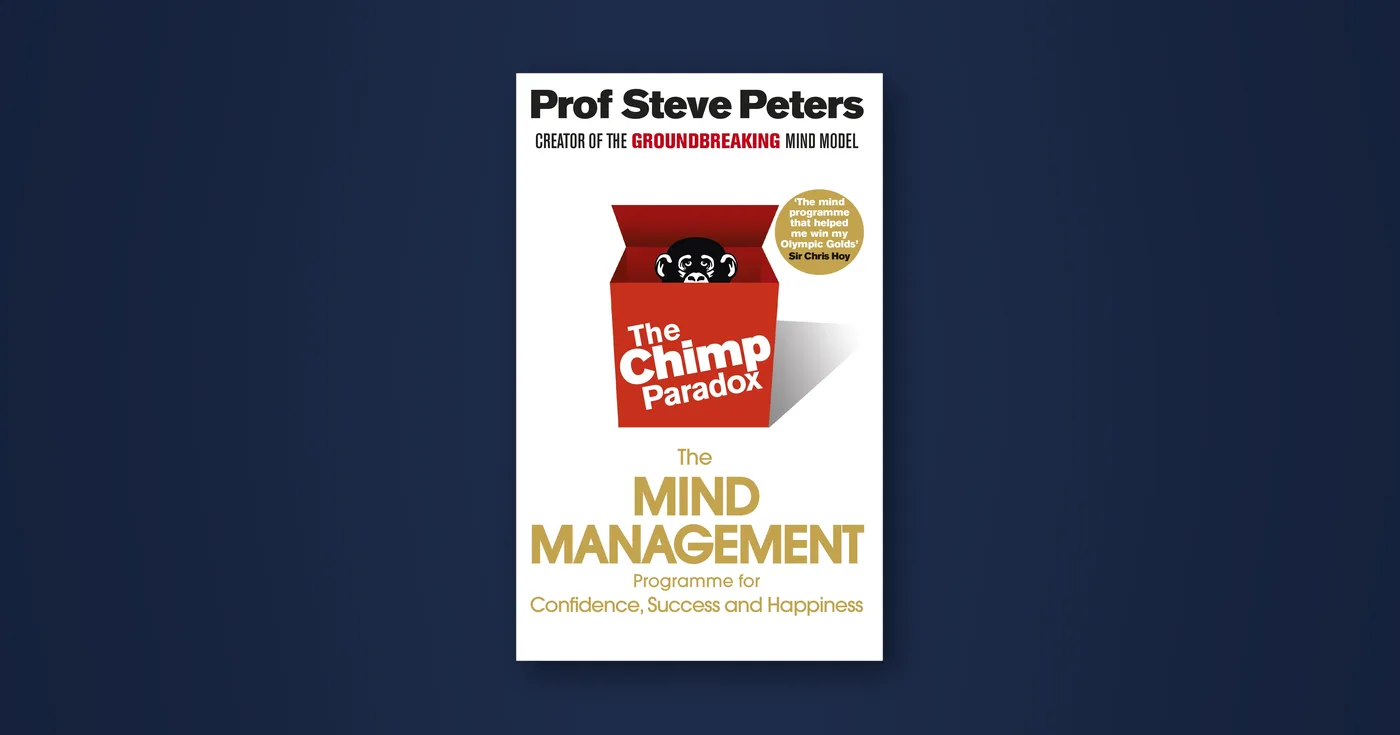
The Chimp Paradox
Read it if…
- You react in the moment, then wonder afterwards why on earth you said or did that.
- You know what you should do, but worry, anger or self-doubt keeps getting in the way.
- You lie awake at night with thoughts that seem far smaller in the morning.
- You want a simple picture of how your mind works that you can actually remember.
- You perform under pressure, at work, in sport or on a stage, and want calmer control.
Watch the summary
What the book is about
Have you ever snapped at someone, panicked over nothing or talked yourself out of something you really wanted, then looked back and wondered who was in charge? Steve Peters says the answer is your inner Chimp: a fast, emotional part of your brain that thinks for itself and often acts before you get a chance to.
The Chimp Paradox is his mind management model for living with it. Rather than fighting your emotions with willpower, you learn how your mind is built, why the Chimp reacts the way it does, and how to calm it, steer it and put your logical self back in control. The aim is a happier, more confident and more settled you, in work, relationships and everyday life.
What’s inside
The Human and the Chimp Your Human looks for facts and thinks things through. Your Chimp works on feelings and impressions, jumps to conclusions and fills gaps with worst-case guesses.
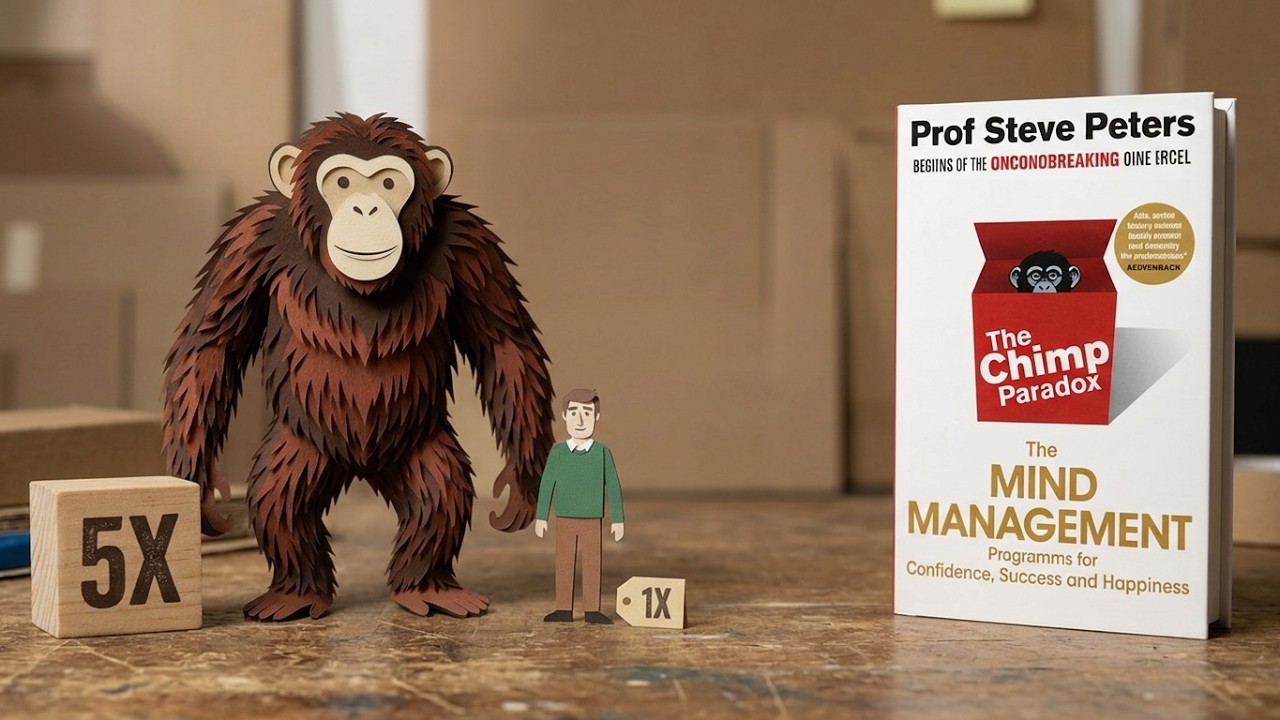
Why willpower fails Everything you see and hear reaches the Chimp first, and Peters describes it as five times stronger than the Human. So instead of wrestling it, you learn to manage it.
The Computer A third part of the mind stores your beliefs and habits and acts far faster than either the Chimp or the Human. Programme it well and it can step in before the Chimp takes over.
Gremlins and Autopilots Gremlins are unhelpful beliefs and habits you can spot and swap out. Autopilots are the helpful ones. Much of the book is about replacing the first with the second.
Goblins Some unhelpful beliefs are laid down in early childhood and are very hard to remove. Peters shows how to contain them so they lose their grip.
The Stone of Life Your core truths, values and sense of purpose. It is the reference point both the Chimp and the Human check against, and the most steadying thing in your mind.
Applying it to real life Later chapters use the model on relationships, stress, health, success and confidence, from people-pleasing to the worries that feel huge at 3am.
Who wrote it
Prof Steve Peters is a consultant psychiatrist who has worked in clinical psychiatry for over 20 years and is a member of the Royal College of Psychiatrists. He came to medicine from a background in mathematics.
He made his name with British Cycling, working with riders such as Sir Chris Hoy and Victoria Pendleton, and has since worked with Olympic teams, England Football, England Rugby, Liverpool FC, World Snooker, NHS organisations, schools and the emergency services. His work continues through Chimp Management. He has also written The Silent Guides and My Hidden Chimp, a version for children, and in his spare time has won World Masters titles over 100, 200 and 400 metres.
What readers are saying
What they love: Readers say the Chimp picture finally explains why they act against their own better judgement, and that once they can name their Chimp, they spot it everywhere. Many find the analogies stick in a way that heavier psychology books don’t, and the real case studies and exercises make it easy to put into practice. Listeners often describe wishing they’d found it years earlier, and some say it helped with things well beyond mood, from their relationships to their eating habits.
What well-known names said: Victoria Pendleton called Peters “the most important person in my career”. Sir Gareth Southgate called it “the book that had the biggest impact on me”. Dave Brailsford has described Peters as a genius, Steven Gerrard credits him with the most consistent form of his career, and Steven Bartlett says the book changed his relationships and his relationship with himself.
Quick facts
- Author
- Prof Steve Peters
- Publisher
- Vermilion (Ebury Publishing)
- Length
- 368 pages
- Published
- 5 January 2012 (paperback)
- Formats
- Paperback, ebook and audiobook, read by the author
- Recognition
- Million-copy bestseller
- Reading time
- Around 7 to 8 hours
- Difficulty
- Easy. No psychology background needed.
Our verdict
If your emotions sometimes take the wheel before your sensible self gets a say, this book will change how you understand your own reactions. Steve Peters splits the mind into the Human, the Chimp and the Computer, a picture so simple you'll start using it the same day. It suits anyone who wants practical self-management rather than therapy jargon, and it rewards being read slowly with the exercises. The audiobook, nearly ten hours, is read by Peters himself.
WillYouRead.com is independent and not affiliated with the author or publisher. This page is not medical advice. If you're struggling with your mental health, please speak to your GP.
More in Brain, mind and psychology
- The DOSE Effect by TJ Power
- Dopamine Nation by Anna Lembke
- The Molecule of More by Daniel Z. Lieberman and Michael E. Long (coming soon)
- Thinking, Fast and Slow by Daniel Kahneman
- Why Has Nobody Told Me This Before? by Dr Julie Smith (coming soon)
- Chatter by Ethan Kross (coming soon)