Is this book for you?
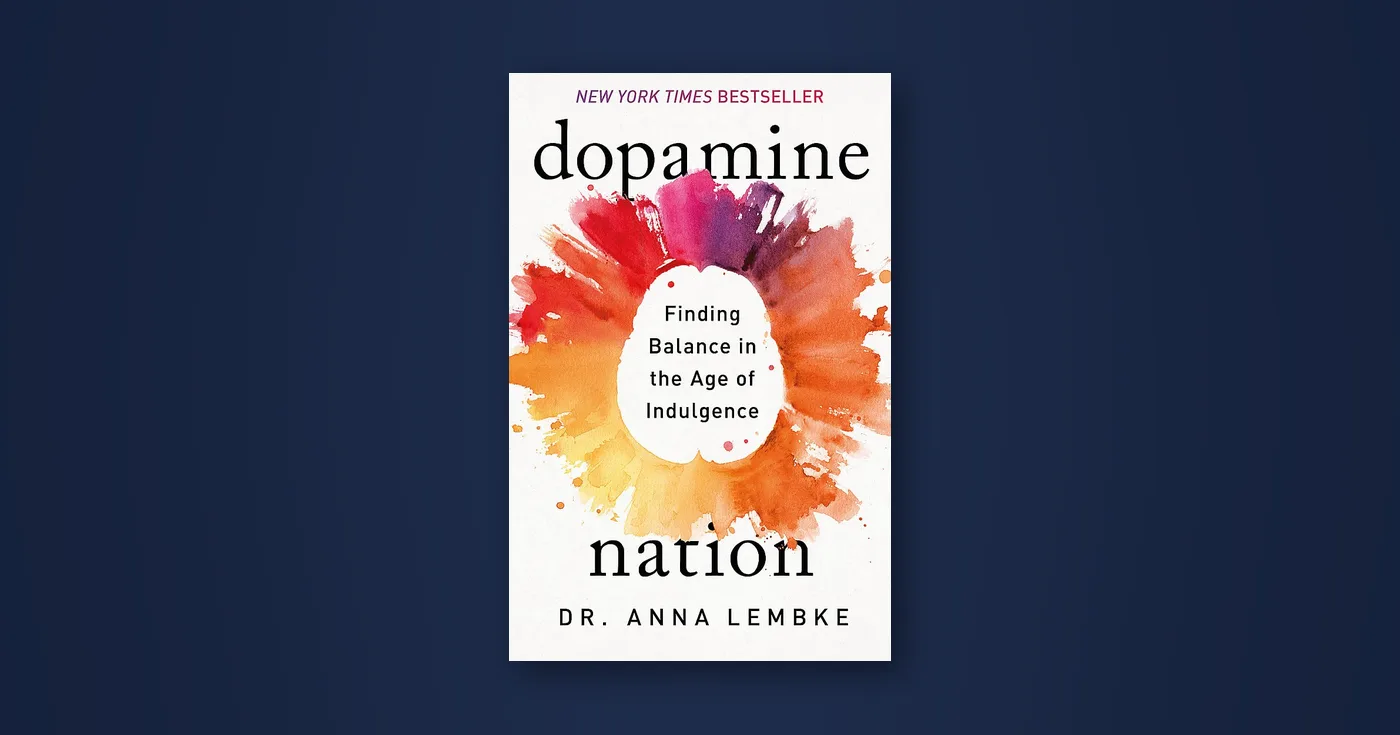
Dopamine Nation
Read it if…
- You reach for your phone, snacks or a scroll far more often than you'd like.
- You've noticed the things you enjoy seem to give you less pleasure over time.
- You want the science of cravings and habits explained in plain English.
- You like real stories from a psychiatrist's clinic, not just theory.
- You're ready to try a practical reset, like a month off something you overdo.
Watch the summary

What the book is about
We live surrounded by easy, high-reward pleasures: phones, food, shopping, gaming, gambling, news and more. Dopamine Nation explains why chasing all that pleasure leaves so many of us feeling worse, not better, and what we can do about it.
Dr Anna Lembke, a Stanford psychiatrist who specialises in addiction, blends brain science with real stories from her clinic. Her message is hopeful: by understanding how the brain balances pleasure and pain, anyone can step back, reset and find more contentment in everyday life.
What’s inside
The pleasure-pain balance Lembke pictures pleasure and pain as two sides of a seesaw in the brain. Every hit of pleasure tips it one way, and the brain works hard to level it again.
The gremlins After each high, the brain tips the balance towards pain to restore order. Repeat the high too often and those effects pile up, leaving us flat, anxious and craving more.
A month off The heart of the reset is about four weeks away from whatever you overdo. It’s uncomfortable at first, but it lets the brain’s reward system recover so simple pleasures feel good again.
The DOPAMINE method A step-by-step approach Lembke uses with her own patients, spelled out with the letters of the word dopamine.
Self-binding Practical ways to put distance between you and temptation, from physical barriers to time limits and clear rules about what’s off limits.
Pressing on the pain side Small, healthy doses of discomfort, such as cold water or hard exercise, can tip the balance back towards lasting pleasure.
Radical honesty Telling the truth, even about small things, builds self-awareness, strengthens relationships and supports recovery.
Prosocial shame Owning our mistakes with people who accept us turns shame into connection, reminding us that we belong.
Who wrote it
Dr Anna Lembke is medical director of Stanford Addiction Medicine, programme director for the Stanford Addiction Medicine Fellowship and chief of the Stanford Addiction Medicine Dual Diagnosis Clinic. She has published more than a hundred papers and commentaries, including in The New England Journal of Medicine and JAMA, and has testified before committees of the US Congress.
She also wrote the bestseller Drug Dealer, MD, about the opioid epidemic, and appeared in the Netflix documentary The Social Dilemma. She still runs a busy clinical practice, and her next book, Radical Surrender, is due in November 2026.
What readers are saying
What they love: Readers say Lembke makes complex neuroscience genuinely easy to follow, using simple images like the seesaw. The patient stories come up again and again as the part that makes the science feel human. Many say the book stays with them long after they finish it, and that it changed how they think about their everyday habits, not just serious addictions.
What well-known names said: Beth Macy, author of Dopesick, called it “riveting, scary, cogent and cleverly argued”. Therapist and bestselling author Lori Gottlieb said Lembke deeply understands the clash between modern addictions and our ancient brains. Neuroscientist Daniel Levitin said it radically changes how we think about pleasure, pain, reward and stress. The Guardian described Lembke as “a whiz on why we get hooked on things”.
Quick facts
- Author
- Dr Anna Lembke
- Publisher
- Headline (UK)
- Length
- 304 pages
- Published
- 2021. UK paperback 19 January 2023
- Formats
- Hardback, paperback, ebook and audiobook, read by the author
- Recognition
- Instant New York Times bestseller, over a million copies sold, translated into 30 languages
- Reading time
- Around 6 hours
- Difficulty
- Easy. The science is explained through real patient stories.
Our verdict
If you feel hooked on your phone, food or any easy pleasure, this book will change how you see your cravings. Anna Lembke's pleasure-pain balance explains why every high is followed by a low, and why a month away can reset it. It suits anyone curious about the science of habits, and the patient stories make it easy to follow. The audiobook is just over six hours and read by Lembke herself.
WillYouRead.com is independent and not affiliated with the author or publisher. This page is not medical advice. If you're worried about addiction or your mental health, please speak to your GP.
More in Brain, mind and psychology
- The DOSE Effect by TJ Power
- The Molecule of More by Daniel Z. Lieberman and Michael E. Long (coming soon)
- Thinking, Fast and Slow by Daniel Kahneman
- Why Has Nobody Told Me This Before? by Dr Julie Smith (coming soon)
- Chatter by Ethan Kross (coming soon)
- The Chimp Paradox by Prof Steve Peters (coming soon)