Is this book for you?
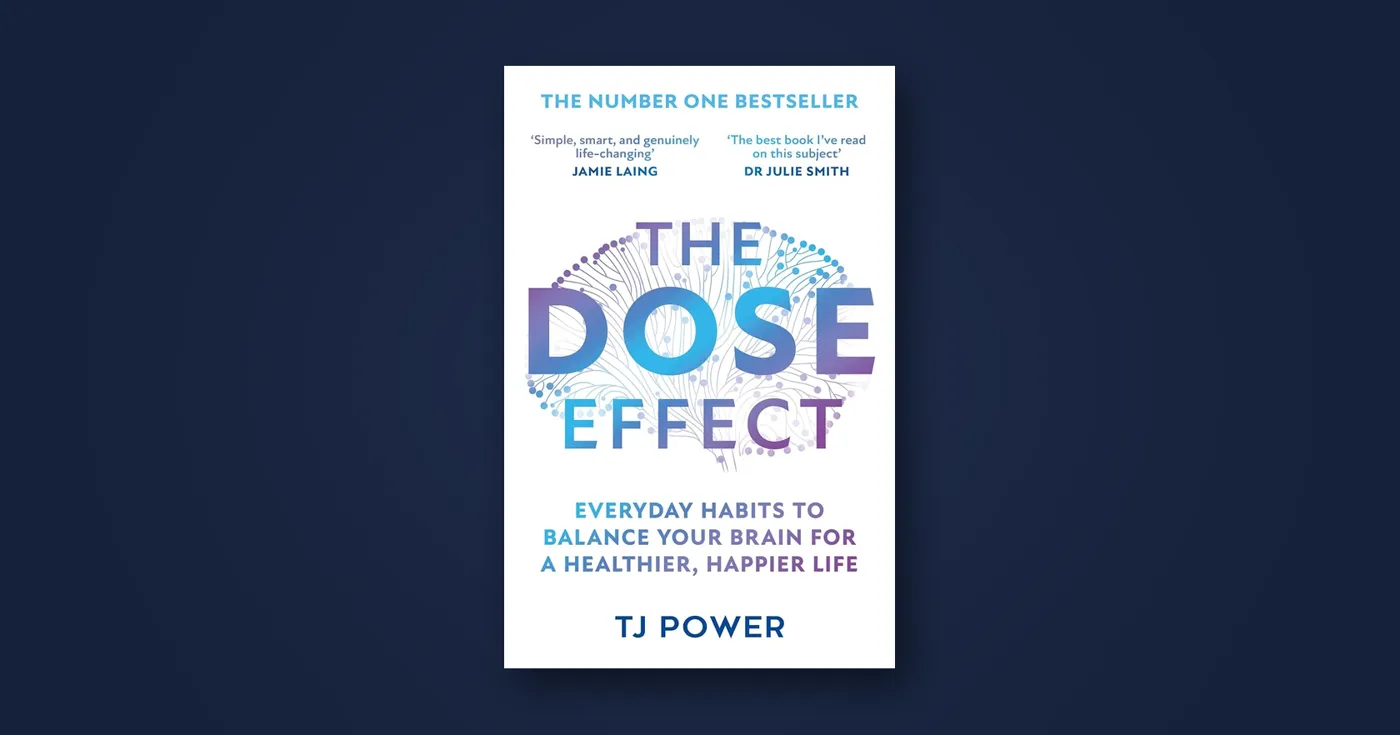
The DOSE Effect
Read it if…
- You spend more time on your phone than you'd like to admit.
- You feel low on energy or motivation and can't pinpoint why.
- You want practical steps rather than theory.
- You've never read a book about brain chemistry before.
- You'd like something to share with a partner, teenager or team.
Watch the summary

What the book is about
The DOSE Effect is built around four chemicals in your brain: dopamine, oxytocin, serotonin and endorphins. Power’s argument is that a lot of everyday low mood, stress and lack of focus comes from these being thrown off balance by modern life, especially constant screens, late nights and too much comfort.
The good news is that the fix isn’t complicated. The book is a set of small, everyday habits designed to bring each chemical back into balance.
What’s inside
The book gives each chemical its own section.
Dopamine: your motivation One of the book’s biggest ideas is fast versus slow dopamine. Quick hits like scrolling and sugar give a spike then a crash. Slower sources, like finishing hard tasks and working towards long-term goals, build lasting drive.
Oxytocin: your connection The chemical behind trust, closeness and feeling part of something.
Serotonin: your confidence and calm Linked to daylight, sleep, pride and feeling settled in yourself.
Endorphins: your stress relief The reward your body gives you for physical effort and challenge.
Each section ends with practical actions, framed as one-week challenges. You try one change at a time rather than overhauling your whole life at once.
Who wrote it
TJ Power is a neuroscientist and a former psychology lecturer at the University of Exeter, where he noticed how little mental health support there was in schools and workplaces. He co-founded Neurify and now runs the DOSE Lab, giving talks to schools, companies and sports teams around the world.
What readers are saying
What they love: how easy it is to read. Reviewers keep coming back to the plain writing and the fact that you don’t need any science background to follow it. Most say that even if not every habit suits them, they find at least one in each section worth keeping. Readers also like that it gently calls out bad habits without making you feel judged.
What they don’t: some found it repetitive or basic, and a few felt it was mostly common sense wrapped in neuroscience. Others wanted the research on the page rather than online.
What well-known names said: clinical psychologist Dr Julie Smith called it “the best book I’ve read on this subject”. Jay Shetty and broadcaster Chris Evans have also recommended it.
Quick facts
- Author
- TJ Power
- Publisher
- HarperCollins (HQ)
- Length
- 304 pages
- Published
- 16 January 2025 (hardback)
- Formats
- Hardback, ebook and audiobook, read by the author
- Recognition
- Number one Sunday Times bestseller
- Reading time
- Around 5 to 6 hours
- Difficulty
- Easy. No science background needed.
Our verdict
If you feel flat, distracted or reach for your phone more than you'd like, this is one of the most useful books you can pick up right now. TJ Power explains four brain chemicals in plain English and gives you small daily habits to rebalance them, with no science background needed. Readers who know this area well may find it familiar, but for everyone else it's a clear, friendly reset. The audiobook is read by the author.
WillYouRead.com is independent and not affiliated with the author or publisher. This page is not medical advice. If you're struggling with your mental health, please speak to your GP.
More in Brain, mind and psychology
- Dopamine Nation by Anna Lembke
- The Molecule of More by Daniel Z. Lieberman and Michael E. Long (coming soon)
- Thinking, Fast and Slow by Daniel Kahneman
- Why Has Nobody Told Me This Before? by Dr Julie Smith (coming soon)
- Chatter by Ethan Kross (coming soon)
- The Chimp Paradox by Prof Steve Peters (coming soon)