Is this book for you?
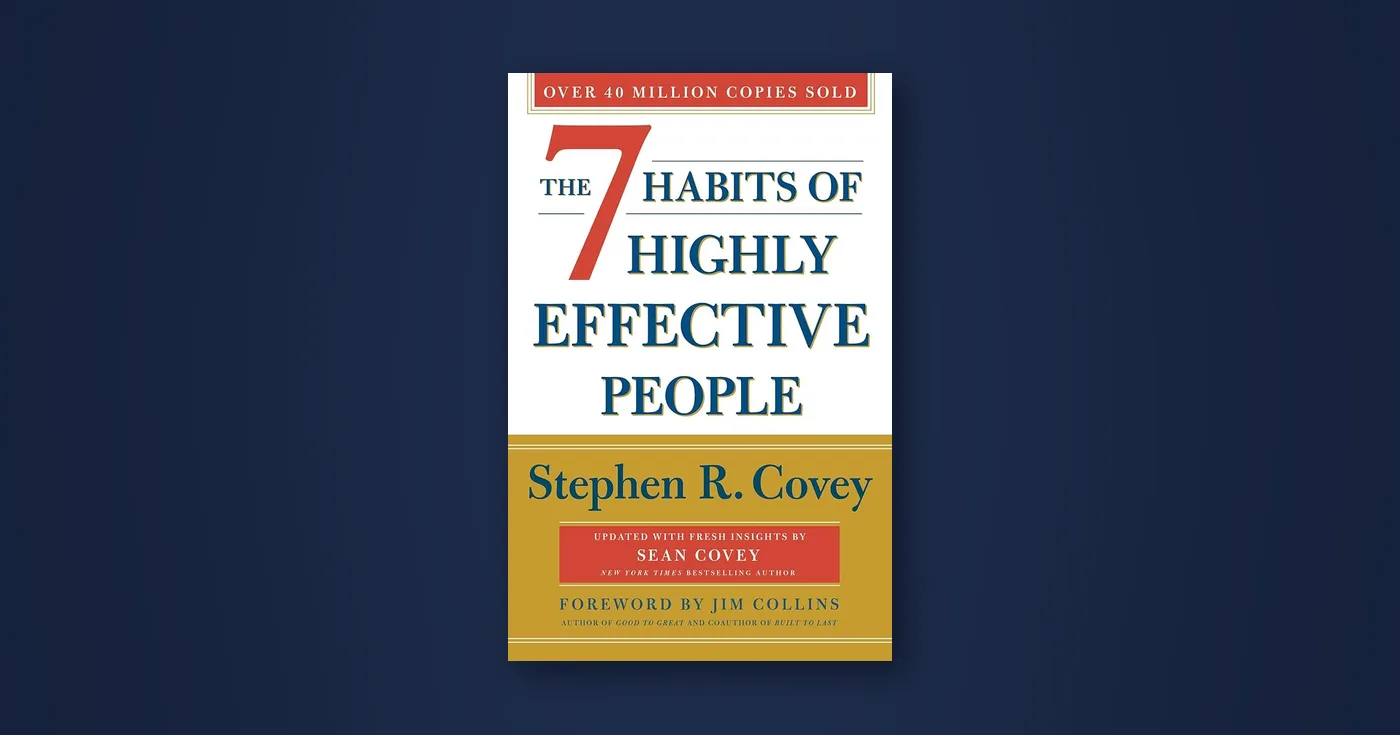
The 7 Habits of Highly Effective People
Read it if…
- You're busy all the time but rarely feel you're getting the important things done.
- You want a framework you can use at home as well as at work.
- You keep reacting to problems instead of getting ahead of them.
- You'd like to be better at listening, teamwork and handling disagreements.
- You want a book you'll come back to for years, not read once and forget.
Watch the summary

What the book is about
The 7 Habits of Highly Effective People is about becoming effective from the inside out. Stephen Covey argues that lasting success doesn’t come from personality tricks or quick techniques, but from character: the principles you live by and the way you see the world. Change how you see things, he says, and how you act will follow.
The seven habits are set out as a path. The first three help you take charge of your own life, the next three help you work well with other people, and the last keeps everything in good shape. This 30th anniversary edition adds takeaways from his son, Sean Covey, on using the habits today.
What’s inside
Be Proactive You choose how you respond to what happens to you. Focus on your Circle of Influence, the things you can change, rather than your Circle of Concern.
Begin with the End in Mind Decide what you want your life to stand for, then let that shape your daily choices. Covey suggests writing a personal mission statement.
Put First Things First Spend more time on what’s important but not urgent, such as planning, relationships and health, instead of letting urgent things run your day.
Think Win-Win Look for solutions that work for everyone, so relationships grow stronger rather than turning into contests.
Seek First to Understand Listen to understand the other person before trying to be understood. Covey shows how real listening changes conversations at home and at work.
Synergise When people with different strengths work together openly, the result can be better than anything either would reach alone.
Sharpen the Saw Keep renewing your body, mind, heart and spirit, so you have the energy to keep living the other six habits.
The Emotional Bank Account Trust in any relationship builds through small deposits like kindness, keeping promises and apologising, and drains through withdrawals.
Who wrote it
Stephen R. Covey (1932 to 2012) was an educator, author and leadership teacher. He studied at the University of Utah, Harvard, where he took an MBA, and Brigham Young University, where he later taught. He founded the Covey Leadership Center, which merged with Franklin Quest in 1997 to become FranklinCovey. Time named him one of its 25 most influential Americans in 1996, and he held the Jon M. Huntsman Presidential Chair in Leadership at Utah State University. His son Sean Covey, a bestselling author himself, added the new insights in this edition.
What readers are saying
What they love: Readers treat it as a lifelong reference rather than a one-off read, returning to it at different stages of life. Many value that it works at home as much as at work, with stories drawn from family life as often as from business. People also find that the habits give them a shared language with partners, children and colleagues.
What well-known names said: Arianna Huffington said the book’s wisdom is “more relevant than ever” thirty years on, and Daniel Pink has also praised it.
Quick facts
- Author
- Stephen R. Covey, with new insights from Sean Covey
- Publisher
- Simon & Schuster
- Length
- 464 pages
- Published
- First published 1989. 30th anniversary edition 19 May 2020 (paperback)
- Formats
- Paperback, ebook and audiobook, read by Stephen R. Covey and Sean Covey
- Recognition
- Over 40 million copies sold. Named the No. 1 Most Influential Business Book of the Twentieth Century
- Reading time
- Around 11 to 13 hours
- Difficulty
- Moderate. Best taken one habit at a time.
Our verdict
If you feel busy but not effective, this is the book that shows you why and what to do about it. Covey's seven habits take you from managing yourself to working well with others, with simple tools like the Circle of Influence and the urgent versus important matrix. It suits anyone who wants lasting change rather than quick tips, and it rewards reading one habit at a time. The 30th anniversary audiobook is read by Stephen Covey and his son Sean.
WillYouRead.com is independent and not affiliated with the author or publisher.
More in Habits and productivity
- Atomic Habits by James Clear
- The Power of Habit by Charles Duhigg
- Deep Work by Cal Newport
- Essentialism by Greg McKeown
- The 7 Habits of Highly Effective People by Stephen R. Covey (coming soon)
- Eat That Frog! by Brian Tracy