Is this book for you?
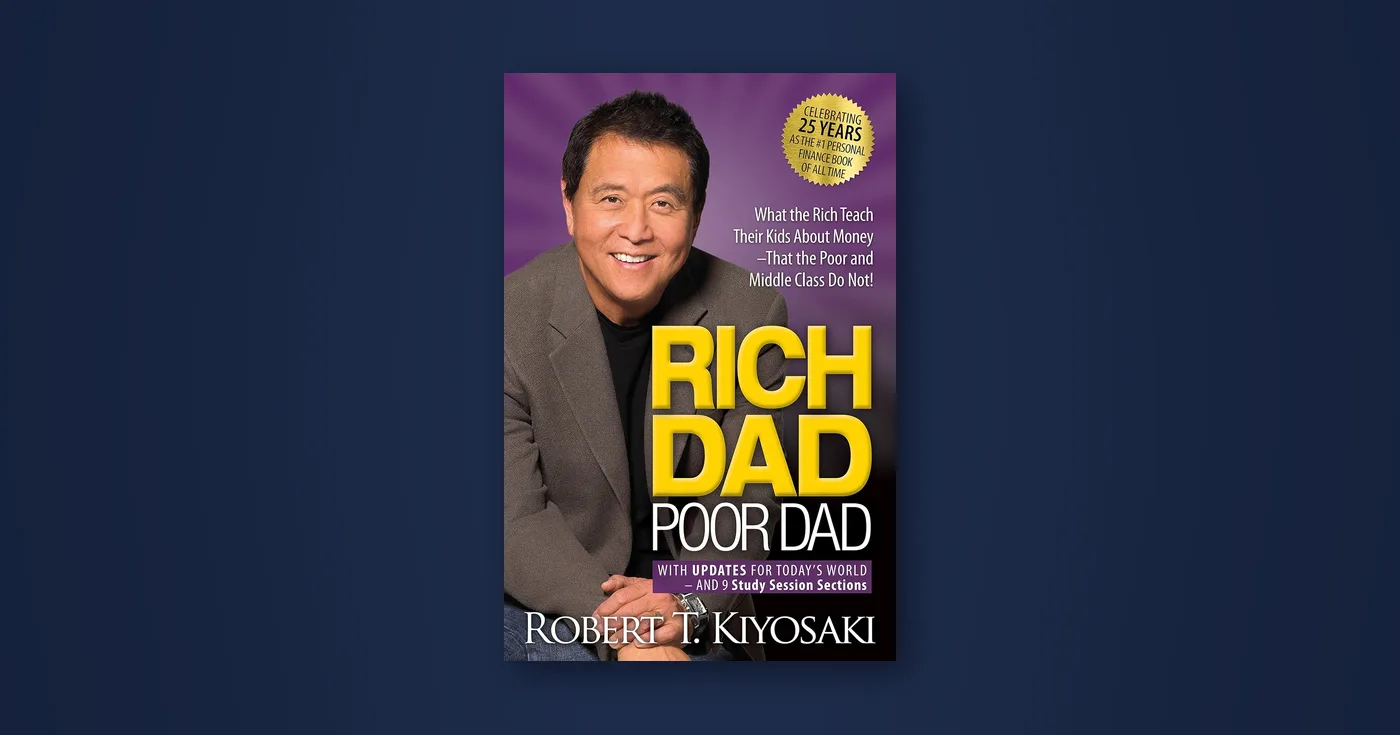
Rich Dad Poor Dad
Read it if…
- You were never taught about money at school and feel like you're playing catch-up.
- You earn a decent wage but never seem to get ahead.
- You want to understand the real difference between an asset and a liability.
- You've thought about investing or a side business but don't know where to start.
- You want a first money book that's easy to read and hard to forget.
Watch the summary

What the book is about
Robert Kiyosaki grew up with two father figures. His own dad was highly educated and worked hard all his life, but always seemed short of money. His best friend Mike’s dad was an entrepreneur and investor who built his own wealth. Kiyosaki calls them his poor dad and his rich dad.
The book follows what the rich dad taught the two boys about money, from their first unpaid job as children onwards. Its central point is that earning a high income isn’t what makes people wealthy. What matters is understanding how money works, and learning to make it work for you rather than spending your life working for it.
What’s inside
The rich don’t work for money Most people work for a pay cheque out of fear or desire. The rich dad taught the boys to look for ways to make money work for them instead.
Assets and liabilities An asset puts money in your pocket. A liability takes money out. Kiyosaki argues that learning this one difference changes how you spend, save and borrow, and explains why he doesn’t count your home as an asset.
Mind your own business Your job pays the bills, but your real business is your asset column. Keep your day job and build up things that earn for you on the side.
Taxes and companies Why the rich dad paid close attention to how tax works and how businesses are set up, and why he thought ordinary earners should learn the same rules.
The rich invent money Your mind is your greatest asset. Learning to spot opportunities others miss matters more than how much you have to start with.
Work to learn Choose jobs for the skills they teach, not only the pay. Selling, communicating and managing people are the skills Kiyosaki says pay off for life.
Twenty-five years on The anniversary edition adds short notes throughout, looking back at each lesson from 1997 to today.
Who wrote it
Robert T. Kiyosaki was born and raised in Hawaii, where his father was head of education for the state. He served in Vietnam as a Marine Corps officer and helicopter gunship pilot, then went into business, launching nylon and Velcro “surfer” wallets in 1977. In 1985 he co-founded an education company that taught business and investing in seven countries.
Before writing this book, he created CASHFLOW, a board game that teaches the money lessons from his rich dad. He is the founder of the Rich Dad Company and the author of the wider Rich Dad series. The earlier editions of this book were co-written with Sharon L. Lechter.
What readers are saying
What they love: Readers say it explains money in simple, everyday language, which is why so many name it as the first finance book they ever read. The side-by-side contrasts between the two dads, like “don’t take risks” against “learn to manage risk”, stick in people’s minds long after they finish. Many say the six lessons gave them a new way of looking at their pay, their spending and their future. Listeners also praise the audiobook narration.
Quick facts
- Author
- Robert T. Kiyosaki
- Publisher
- Plata Publishing
- Length
- 336 pages (25th Anniversary Edition)
- Published
- First published 1997. 25th Anniversary Edition paperback, 19 May 2022
- Formats
- Paperback, ebook and audiobook, read by Tim Wheeler
- Recognition
- Number one New York Times bestseller. The publisher says over 40 million copies sold in 38 languages
- Reading time
- Around 5 to 6 hours
- Difficulty
- Easy. No money or finance background needed.
Our verdict
If you were never taught about money at school and want a simple way to start thinking differently about it, this is the book to get. Its best idea is easy to grasp and hard to forget: assets put money in your pocket, liabilities take it out. It suits beginners best, and it's a good one to share with a partner or teenager. The 25th Anniversary Edition adds notes on how each lesson has held up since 1997.
WillYouRead.com is independent and not affiliated with the author or publisher. This page is not financial advice. For decisions about your own money, speak to a qualified adviser.
More in Money
- The Psychology of Money by Morgan Housel
- Rich Dad Poor Dad by Robert Kiyosaki (coming soon)
- The Richest Man in Babylon by George S. Clason (coming soon)
- I Will Teach You to Be Rich by Ramit Sethi (coming soon)
- Die With Zero by Bill Perkins (coming soon)
- The Simple Path to Wealth by JL Collins (coming soon)